Energy and ESG Performance
Local Law 97 Is Today’s Challenge. Your Building Should Be Ready for What Comes Next.
How building automation can help New York City owners reduce energy waste, address Local Law 97 emissions exposure, and prepare for future technologies and requirements.
Local Law 97 is already changing the economics of owning and operating buildings in New York City. Most buildings over 25,000 square feet are subject to greenhouse-gas emissions limits, and those limits become significantly stricter in 2030. Buildings that exceed them can face meaningful annual penalties.[1]
Owners planning investments today also need to make sure their buildings are ready for new and emerging demands — whether those come from tighter regulations, changing energy markets, or technologies that may not be widely used yet.
That is where the right building automation strategy can make a difference.
Local Law 97 makes energy performance a financial issue
LL97 sets annual greenhouse-gas emissions limits based on a building’s size and use. Buildings that exceed their limit can face penalties of $268 per metric ton of CO₂ equivalent above the threshold.[2]
The first limits took effect in 2024. In 2030, they become much more stringent.[1]
Consider a simplified example of a 400,000-square-foot multifamily building. Under the current multifamily threshold of approximately 0.00675 metric tons of CO₂e per square foot, its annual emissions allowance is about 2,700 metric tons.[3]
If the building emitted 3,000 tons, it would exceed that allowance by about 300 tons — representing roughly $80,000 in potential annual penalties.
Under the tighter 2030 multifamily threshold of approximately 0.00335 metric tons per square foot, that same emissions level could create annual exposure of roughly $445,000.[3]
Actual calculations vary by building type, energy use, applicable adjustments and other LL97 rules, but the direction is clear: what may be a manageable issue today can become a much larger operating cost in 2030.
Building automation can help reduce the problem
There is no single technology that solves Local Law 97. Some buildings will need major upgrades such as electrification, heat pumps, more efficient HVAC systems, envelope improvements or energy storage.
But one question applies to almost every building:
How efficiently are the systems you already have actually operating?
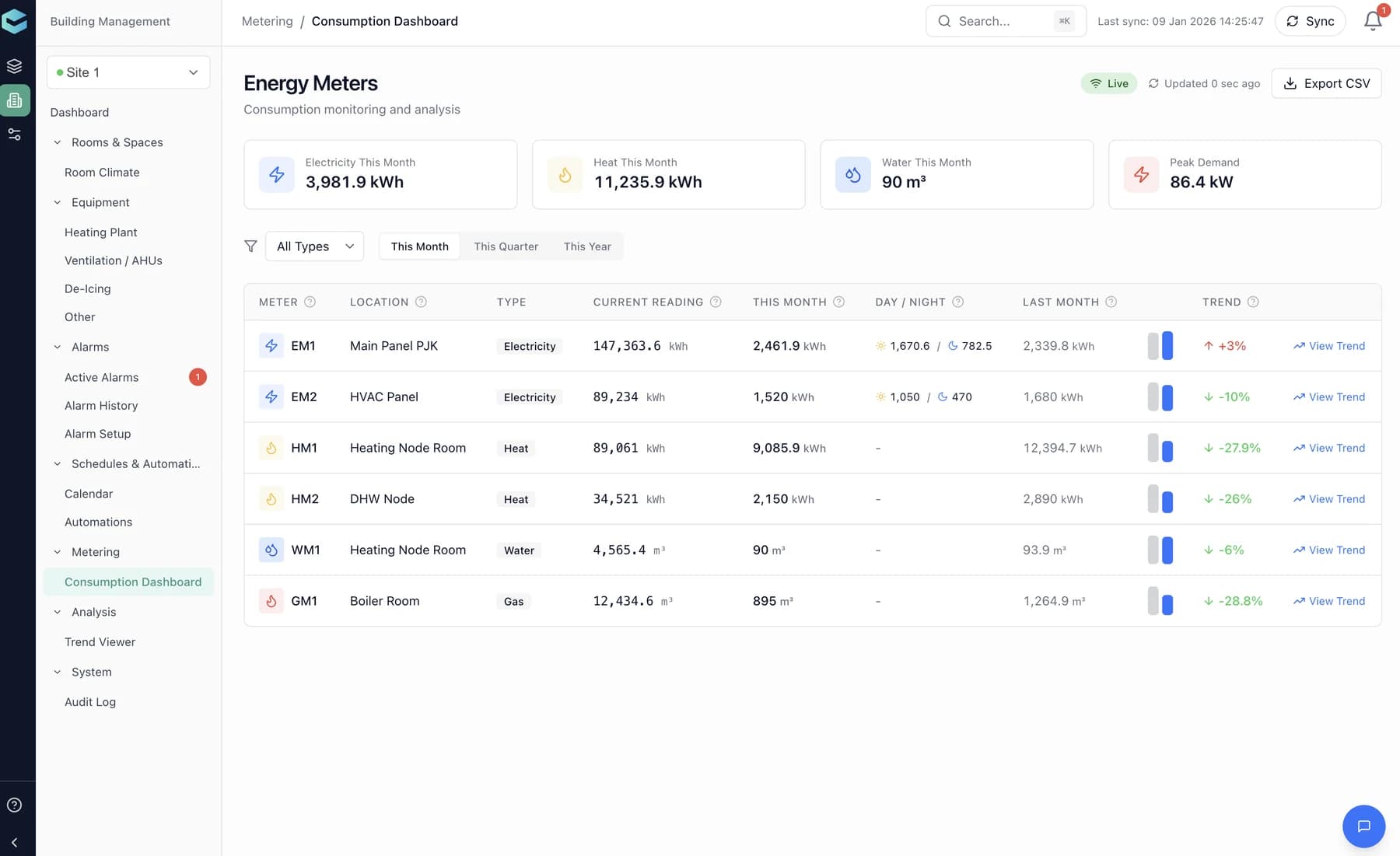
Bisly helps owners manage HVAC, lighting, metering and other building systems from one automation platform.[4] Better scheduling, temperature control, occupancy-based logic and energy monitoring can reduce unnecessary consumption while giving operators better visibility into how the building is performing.
That can help owners reduce avoidable HVAC and lighting use, identify equipment running when it should not be, spot abnormal behavior earlier, monitor energy trends, adjust control strategies and use actual building data to guide future investments.
For Local Law 97, reducing wasted energy can directly reduce emissions exposure.
But the bigger opportunity is what comes next
The building you operate ten years from now may look very different from the one you operate today.
Heat pumps may replace fossil-fuel heating. Battery storage may become more common. EV charging may become a major electrical load. Utilities may introduce new demand-response programs. New sensors, optimization tools and AI-driven building technologies will continue to emerge.
Local Law 97 itself already accounts for technologies such as energy storage, beneficial electrification, solar generation and EV charging within parts of its compliance framework.[1]
Regulations will evolve too.
That means owners should not only ask whether a building management system can optimize today’s HVAC equipment. They should also ask:
Can it adapt when the building changes?
Can new equipment be integrated? Can new energy systems become part of the same operating environment? Can control strategies evolve without replacing the entire platform?
Build a flexible foundation
Bisly is built around a digital twin of the building, allowing HVAC, lighting, metering, access and other systems to be represented within one common environment.[4]
Its architecture also supports APIs, standard protocols and third-party integrations, allowing additional systems and equipment to become part of the building automation environment as the property evolves.[4]
The point is not to predict exactly what building technology will look like in 2035.
It is to avoid locking the building into an architecture that makes future change unnecessarily difficult or expensive.
Address Local Law 97 — and prepare for what follows
Local Law 97 gives owners a clear reason to improve building performance today. Bisly can help reduce energy waste, improve visibility and give operators greater control over how their buildings perform.
But the investment should do more than address one regulation.
A building automation system installed today should also prepare the property for new technologies, new energy strategies and new requirements that will emerge over the years ahead.
The goal is not simply to comply with Local Law 97.
It is to make the building ready for what comes next.
References
- New York City Department of Buildings, Local Law 97 – Greenhouse Gas Emissions Reductions
- New York City Department of Buildings, Greenhouse Gas Emissions Reduction Violations
- New York City Rules, Local Law 97 building emissions limits and property-type thresholds
- Bisly, building automation platform, digital twin and system integration capabilities